Maths

White Rose Maths
We use the White Rose Scheme at St Joseph's as we believe it creates knowledgeable and able mathematicians who have a life-long love of maths. It offers our children the ability to learn the language of maths and to use it to communicate their mathematical thinking, to be fluent in key skills, to have a thorough conceptual understanding of age-appropriate materials and the ability to confidently apply their knowledge to unknown and everyday situations.
Advice and guidance for parents | White Rose Education
Our Aims
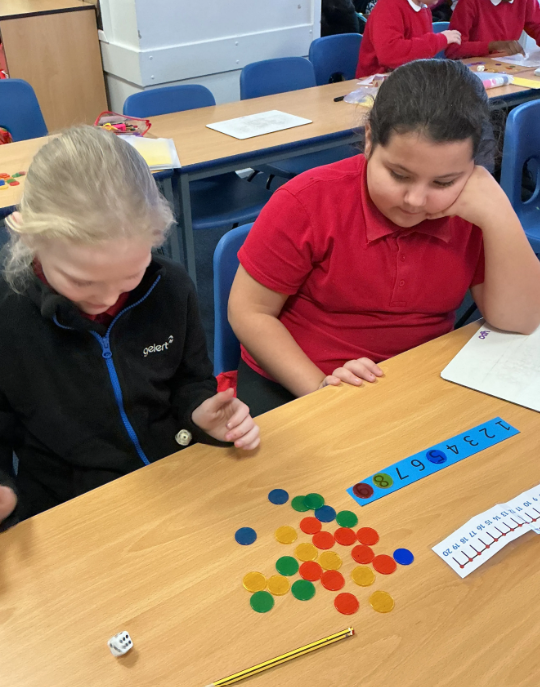
Here at St Joseph’s Catholic Primary School, we aim to develop our children’s mathematical skills by providing them with a secure understanding of number and to nurture their confidence when using a range of efficient strategies for addition, subtraction, multiplication, division and problem solving. We also provide our children with experiences of fractions, shape, measures and statistics in a range of creative and thought-provoking contexts to support them in their mathematical journey and help them to appreciate the power of numeracy whilst encouraging curiosity as they become conscientious mathematicians!

National Curriculum
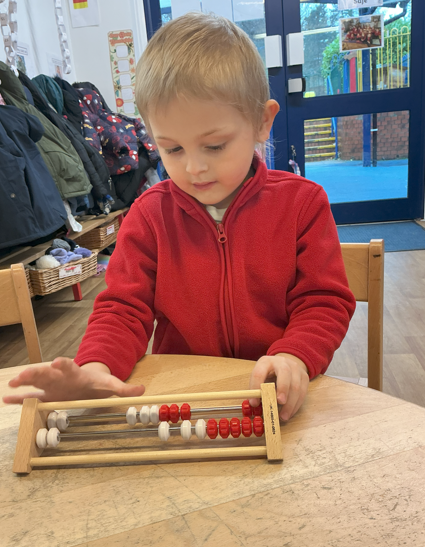
The three main aims of the national curriculum are for all children to be fluent, to be able to reason and problem solve. Some children may require more support at times, but we would still expect them to be exposed to reasoning and problem-solving questions. Staff follow a carefully designed, logical and systematic sequence to teaching mathematics. Time is spent exploring age-appropriate tasks and all children are supported and taught how to explain their reasoning and apply this to solving problems.
Children also are provided with a carefully structured daily practise of fluency as we believe this will move our children towards being able to rapidly recall number facts and solve problems with unconscious competence and increasing self-confidence.
Mastery Principles
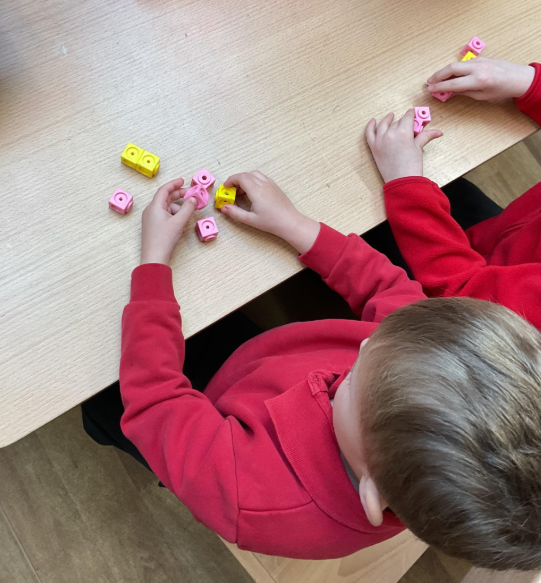
Our approach to teaching mathematics is underpinned by mastery principles, ensuring that all pupils develop a deep, secure and connected understanding of key concepts. Learning is carefully sequenced in small, coherent steps so that new knowledge builds on prior understanding. Teachers use precise mathematical language, high-quality questioning and clear modelling to promote reasoning and conceptual understanding. A range of representations and structures are used to expose the underlying mathematical ideas, helping pupils make connections and avoid superficial learning. Through intelligent practice, variation and regular opportunities for discussion, pupils develop fluency, confidence and the ability to apply their knowledge flexibly across different contexts.


Reasoning and Problem-Solving
We aim to vary the level of challenge in our reasoning and problem-solving questions so that some are accessible to every child while others help stretch thinking and deepen understanding. Where children have achieved mastery of a concept, we aim to deepen that understanding through non-routine problems and situations that require children to generalise and note patterns and connections.
Teachers are provided with long term and medium-term plans but adapt these to meet the needs of their pupils following assessments and gap analysis. We also use the Ready to Progress Criteria published by the DfE to help identify the key knowledge that needs to be understood before children move to the next academic year.
Fluency and Times Tables
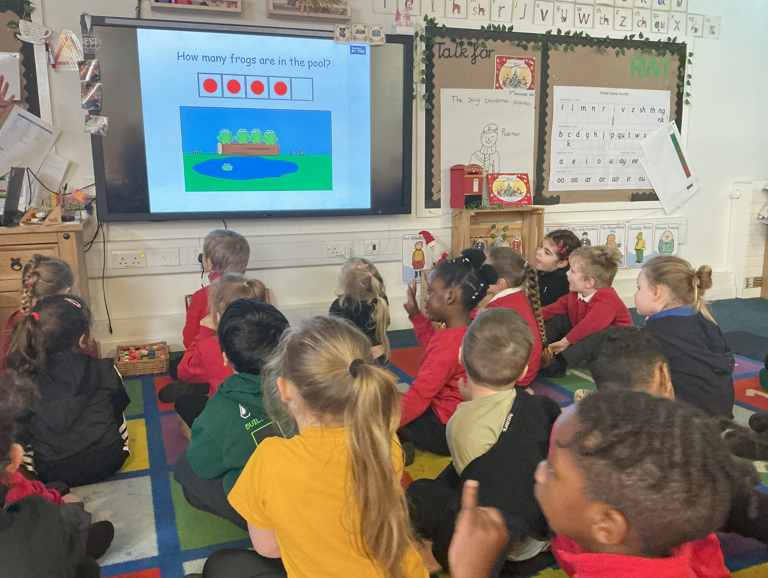
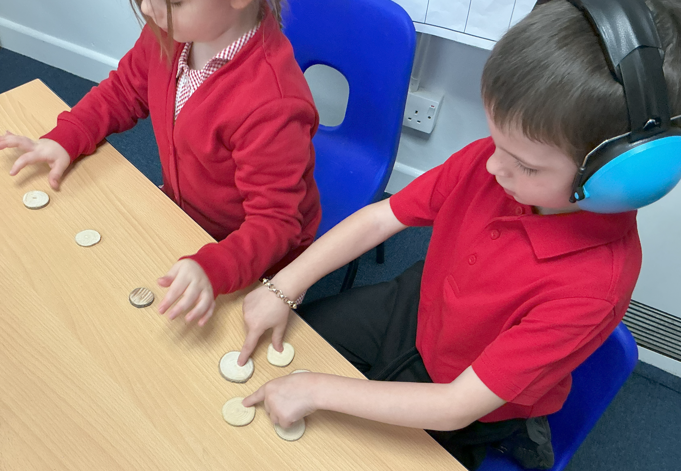
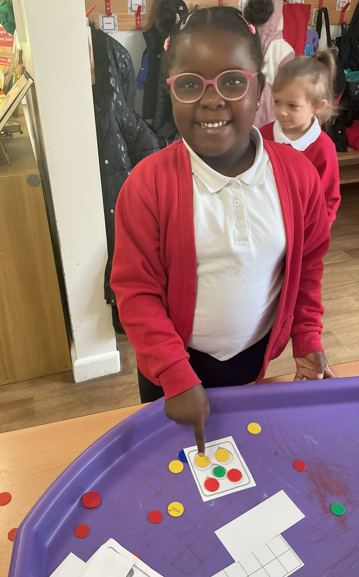
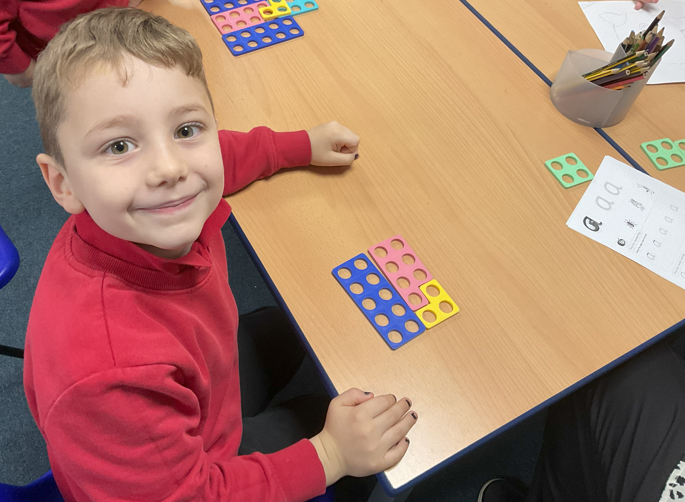
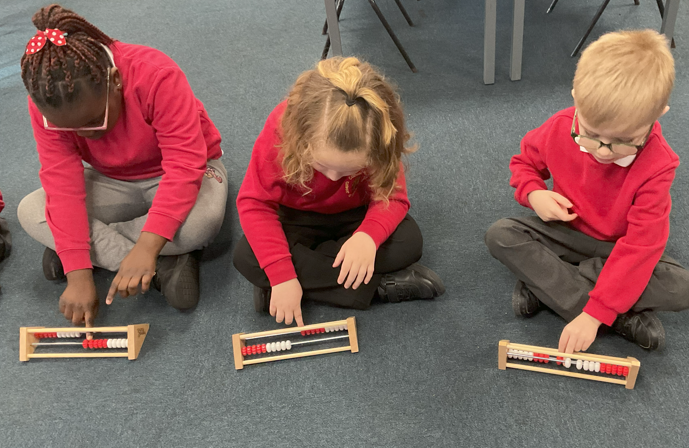
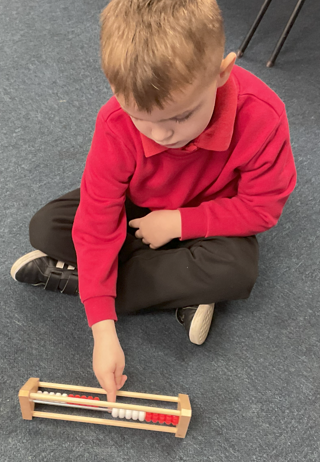
Fluency is a key priority in our Maths curriculum. At St Joseph’s we use the Mastering Number programme developed by the National Centre for Excellence in the Teaching of Mathematics (NCETM) to strengthen pupils’ fluency and confidence in mathematics. In EYFS and KS1, the programme provides structured, daily opportunities for children to develop a deep understanding of number, secure key facts, and build strong foundations in place value and number relationships. Through carefully sequenced teaching and consistent representations, pupils gain automaticity and flexibility with number. Due to its positive impact on attainment and mathematical confidence, the approach has recently been extended into KS2, with Year 4 and Year 5 classes now also implementing the Mastering Number programme to further consolidate fluency and support progression in more complex mathematical concepts. Across the school, each class prioritises the development of strong calculation skills. Daily arithmetic practice is built into lessons to promote fluency and confidence, while times tables are taught in a clear, systematic sequence to ensure secure understanding. Pupils are carefully prepared for the statutory Multiplication Tables Check in Year 4, with regular retrieval practice embedded to strengthen long-term retention and recall of key number facts.
TTRockstars and Numbots day
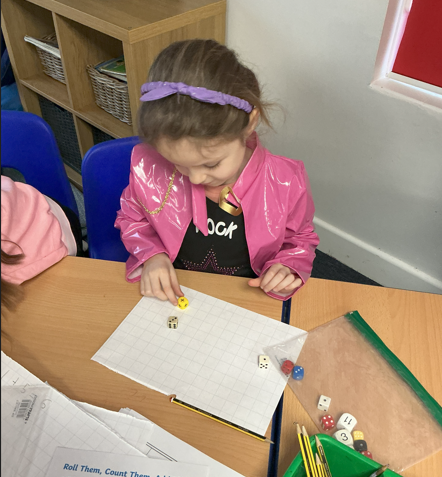
Our recent Maths Enhancement Day was a fantastic celebration of learning, inspired by Times Tables Rock Stars and NumBots. The school was buzzing with excitement as children spent the day immersed in a wide range of maths games and practical activities designed to build fluency, confidence and problem-solving skills. Pupils took part in friendly competitions, challenging themselves and each other in times tables and number bonds battles. Adding to the fun, children came dressed as rockstars or robots, bringing creativity and energy to the event. It was a brilliant day that showed how maths can be engaging, inclusive and full of fun while strengthening key mathematical skills.